BRRRR vs Turnkey Rentals: Paying With Cash or Paying With Work
BRRRR vs turnkey compared on one house: $135,000 down for a finished rental, or $360,000 back out in a refinance. See year one cash flow both ways.
By the BRRRRCalculator.org team
BRRRR vs turnkey comes down to one thing: a turnkey rental is a finished house priced at retail, so you put a down payment in and leave it there, while a BRRRR deal starts below market and hands most of your cash back in a refinance once the work is done. Same kind of house at the end. Very different amounts of your money tied up, and very different amounts of your time.
Three things separate them:
- Cash in, and whether it comes back
- Time in, and how long before rent starts
- Control over the scope, the budget and the finished value
Turnkey: paying retail for a finished rental
A turnkey rental is a house that has already been renovated, often already rented, and sold at or near its finished value. You are buying someone else’s completed work, plus their margin.
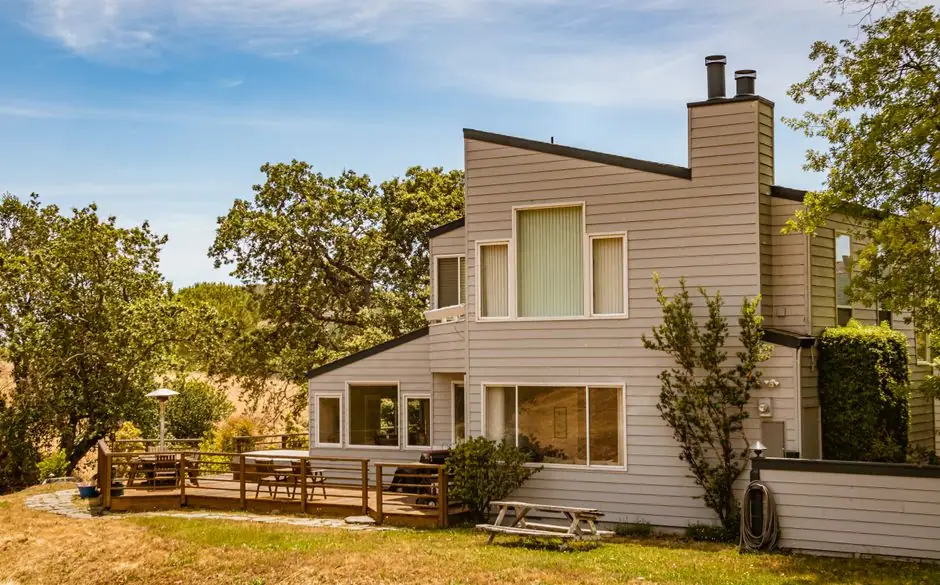
Price the standard house on this site that way. Finished value $500,000, rent $4,400 a month, $6,000 of property taxes and $2,500 of insurance a year.
Buy it turnkey at $500,000 with 25% down. That is $125,000 down plus about $10,000 of closing costs at 2%, so roughly $135,000 of cash in, against a $375,000 loan.
The house is rented in week one. The $135,000 stays in the deal until you sell or refinance.
Turnkey pricing varies by seller and by market, so check the asking price against recent sold comps before you call it a fair retail number. Some turnkey houses are priced above what an appraiser would support.
BRRRR: paying with work and risk instead
Same house, bought before the renovation. Buy at $300,000, spend $60,000 on the rehab, finish at a $500,000 after-repair value.
All in at $360,000. Refinance at 75% of $500,000 and the loan is $375,000, which returns the whole $360,000 and $15,000 on top. A BRRRR example with real numbers walks that same deal step by step.
End state: a $375,000 loan, $4,400 of rent, the same house.
So the finish line is identical and the cash in is not. Turnkey leaves $135,000 of your money in the house. The BRRRR leaves none.
That $15,000 is not free money. Holding costs of $850 a month during the rehab come out of it, and so does any budget overrun. Six months of carry is $5,100 on its own. How much money you need to start covers what to have on hand before you offer.
What each does to your returns in year one
On a $375,000 loan at 7.5% over 30 years, principal and interest run about $2,620 a month. Add $500 of property tax and $208 of insurance and the monthly obligation is about $3,330.
Rent of $4,400 leaves roughly $1,070 before management, vacancy and repairs. After those, the standard deal nets around $1,933 a year, about $160 a month. Principal paydown adds about $3,500 in the first year.
| Turnkey | BRRRR | |
|---|---|---|
| Cash in | $135,000 | $360,000 during the project |
| Cash back out | none until you sell | $375,000 refinance |
| Cash left in the deal | $135,000 | none, plus $15,000 out |
| Rent starts | week one | after the rehab |
| New loan | $375,000 | $375,000 |
| Year one cash flow | about $1,933 | about $1,933 |
| Cash on cash | about 1.4% | no cash left to divide |
Cash on cash is where the gap shows. The same $1,933 on $135,000 is 1.4%, or about 4% once you count principal paydown. The same $1,933 with nothing left in the deal has no denominator, which is what infinite return means and why that figure needs careful reading.
The whole BRRRR edge sits in the gap between $360,000 all in and a $500,000 value. Shrink the gap and the edge shrinks with it. If the appraisal lands at $460,000, the 75% refinance lends $345,000 and you leave $15,000 in. Still far less than $135,000, but no longer a full return of your capital.
Who should not run their own rehab
The $125,000 you avoid putting in is payment for taking on a renovation. Skip BRRRR if you cannot take that on:
- You have no contractor you can call and no way to find one locally
- Your reserves cover the budget but not a 20% overrun
- You cannot walk the house during the work, or pay someone who will
- You need rent starting this month, not in six
- A stalled project would put your other bills at risk
Rehab risk is real and it is priced into the better return. What can go wrong in a BRRRR lists the usual ways the plan breaks: a low appraisal, a rate move, a scope that keeps growing.
A manager can run the finished rental for 8 to 10% of rent in most markets, so the holding side is close to hands off either way. The rehab is not.
What is the best BRRRR strategy?
The best BRRRR strategy is the lightest rehab that still creates enough value for a full cash-out. Cosmetic work on a sound house, one contractor, one written scope, no layout changes and no additions.
That is the version a busy buyer can finish. Every extra trade adds weeks, and every month costs $850 in carry.
The other half of the strategy is the exit. If the finished house will not rent for enough to carry the new loan, the method does not apply, and flipping is the honest answer. Flip or rent sorts out which exit fits which house.
Picking by the cash and time you have
Pick turnkey if you have $135,000 you can leave in a deal and almost no time to give. Pick BRRRR if you have the cash for the project, the reserves for overruns, and six months of attention.
If you have time but not much cash, turnkey is not the real comparison. Same rental, very different cash in covers the version where you buy a rental with a down payment and simply keep it.
Taxes do not pick the winner here. Rent is taxable either way, with operating costs, mortgage interest and depreciation coming off first, under the same residential rental property rules. Refinance proceeds are loan money, not income.
Run both numbers before you choose
Put the deal through the BRRRR Calculator on the home page. Enter the purchase price, the rehab budget, the after-repair value and the rent, and it shows the refinance amount and the cash left in.
Then run the turnkey version: purchase price set to the finished value, rehab set to zero. The cash left in line is the whole comparison.
Frequently asked questions
Is BRRRR or turnkey better?
Neither wins on its own. Turnkey buys speed and a finished house for about $135,000 down on the standard $500,000 example here. BRRRR buys that same house for $300,000 plus $60,000 of work and returns the cash in a $375,000 refinance. You pay with money, or with months of work and rehab risk.
How much more cash does a turnkey rental take?
On the standard example, about $135,000 more left in the deal. A turnkey buy at the $500,000 finished value with 25% down is $125,000 plus roughly $10,000 of closing costs, and that money stays put until you sell. The BRRRR version spends $360,000, then pulls $375,000 out in the refinance, so nothing is left in.
What is the best BRRRR strategy?
The lightest rehab that still supports a full cash-out. Cosmetic work on a structurally sound house, one contractor, one written scope, no layout changes. That keeps the hold short, and holding costs run $850 a month on the standard deal. The best strategy is also the one you can actually finish, which depends on your reserves and your time.
Can you BRRRR without doing the work yourself?
Partly. A property manager can run the finished rental for roughly 8 to 10% of rent in most markets, so the holding side is close to hands off. The renovation is not. Someone has to hire the contractor, approve change orders and check the work. Pay a project manager or an investor-agent if that person cannot be you.
Is a turnkey rental worth paying retail for?
Sometimes. If your time earns more than the rehab spread, or your reserves cannot absorb a 20% overrun, paying retail for a rented house is a fair trade. Check the asking price against recent sold comps first. Some turnkey houses are listed above what an appraiser would support, which hurts you later at a refinance.