BRRRR Method Commercial Real Estate: What Changes on a Commercial or New-Build Deal
The BRRRR method on commercial real estate prices a building on its net operating income, not comps. See how lenders size the refinance, plus new construction.
By the BRRRRCalculator.org team
The BRRRR method on commercial real estate follows the same five steps, and yes, you can BRRRR a commercial property. The one big change is that value comes from the building’s income rather than from nearby sales, so you raise your appraised value by raising rent, cutting expenses and signing stronger leases.
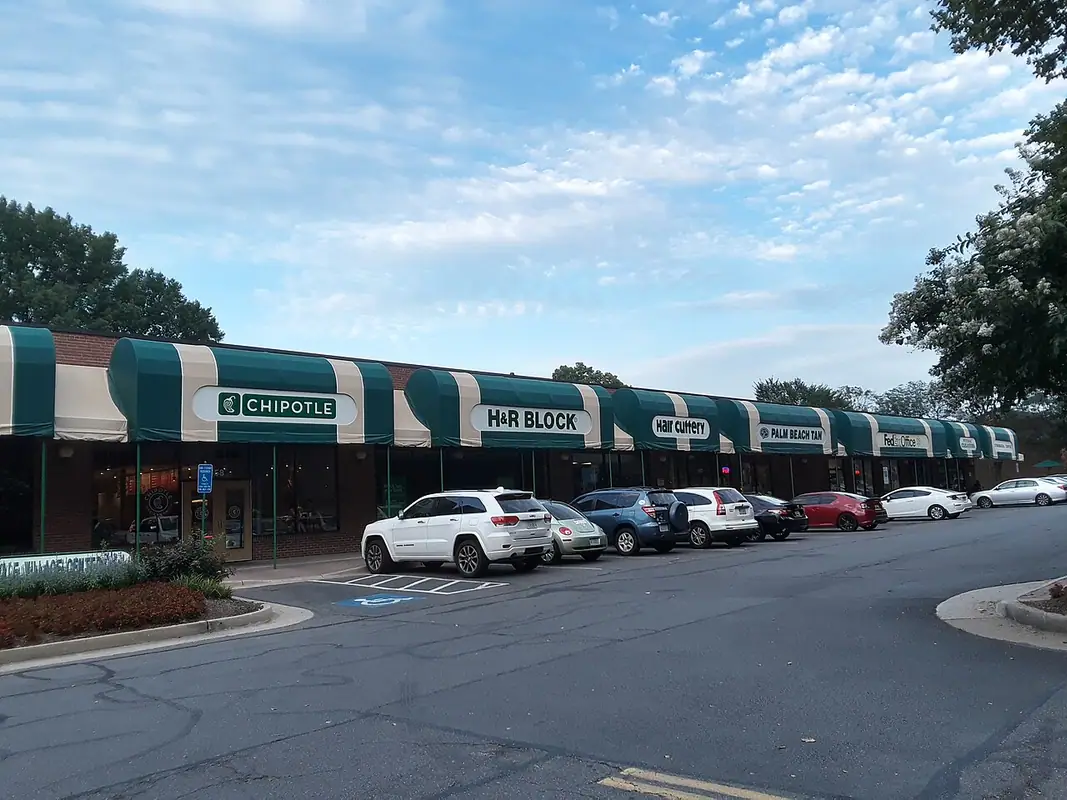
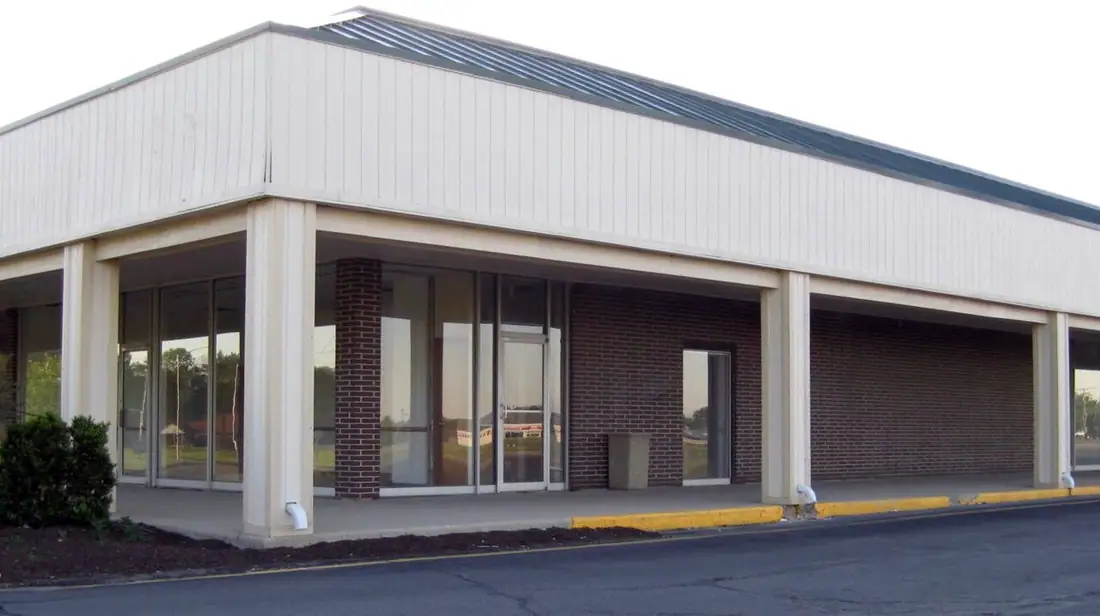
That single change rewrites the financing, the appraisal and the timeline. Here is what shifts on a commercial or new construction deal, and what carries over untouched.
Can you BRRRR a commercial property?
Yes. Buy, renovate, lease, refinance, repeat still works. Three things differ: the appraiser values the property on income instead of comps, the refinance comes from a bank or commercial lender rather than a residential one, and the loan usually carries a balloon date instead of a 30 year fixed rate.
Why commercial value comes from NOI, not comps
A house is priced against similar houses that sold nearby. A commercial building is priced on what it earns, using the income approach: divide net operating income by a market cap rate.
Start from the standard deal on this site. Buy at $300,000, spend $60,000 on work, finish at a $500,000 value with $4,400 a month of rent, $6,000 of taxes and $2,500 of insurance. All in at $360,000. A refinance at 75% of $500,000 lends $375,000, which returns every dollar plus $15,000.
Now value that same income the commercial way. Annual rent of $52,800 less 5% vacancy is $50,160 of effective income. Take out $6,000 of taxes, $2,500 of insurance, about $4,000 of management and $2,600 of reserves, and NOI lands near $35,100.
At a 7% cap rate, that is roughly $501,000 of value, almost the same as the $500,000 ARV. At an 8% cap rate it is about $438,000. At 9% it is about $390,000.
Nothing about the building changed. The value swung $111,000 because the return buyers demand moved two points.
Commercial loan-to-value also tends to run lower, often 65 to 75%. At 70% of a $438,000 value the new loan is about $307,000 against $360,000 all in, so roughly $53,000 stays stuck in the deal.
Cap rates differ by property type, submarket, building age and tenant quality. Pull yours from recent sales of similar buildings close by, or from a broker who closes them, never from a national average.
Which lenders fund a commercial BRRRR
Conventional and DSCR lenders usually stop at four units. Above that, or for retail, office, industrial or self storage, the refinance comes from somewhere else.
- Local banks and credit unions. The main source for small commercial. They underwrite you as well as the property.
- Commercial mortgage brokers. Worth the fee when no local bank likes your asset type.
- Agency multifamily programs for apartment buildings of five units and up.
- Conduit and life company lenders for larger loans, often non-recourse, usually starting around $1 million.
One common mix-up is worth clearing up. SBA loan programs such as 504 and 7(a) require the borrower to occupy most of the space, so they fit a business buying its own building, not a rental BRRRR.
Balloon terms, amortization and recourse
Residential BRRRR math assumes 30 years of fixed payments. Small commercial rarely offers that.
A typical bank deal is fixed for 5, 7 or 10 years, amortized over 20 or 25, with a balloon payment when the fixed period ends. You refinance or sell by that date at whatever rates exist then.
The shorter schedule also costs you monthly. The same $375,000 loan at a rate in the mid 7s runs about $2,620 a month over 30 years and about $2,770 over 25. Add $500 of tax and $208 of insurance and coverage on $4,400 of rent drops from roughly 1.32 to about 1.26. Use your own quote, since rates move.
Most bank loans are recourse, meaning you sign a personal guarantee. Get the term, amortization, balloon date, prepayment penalty and recourse language in writing before you buy.
Leases and the income an appraiser will count
On a commercial deal your lease file is the valuation. Appraisers and underwriters read the rent roll and the signed documents, then count only income they can defend.
Four things move the number:
- Remaining term. A tenant with six years left supports more value than one on a month to month deal.
- Who pays expenses. A triple net lease where the tenant covers taxes, insurance and maintenance produces higher NOI than a gross lease at the same rent.
- Tenant quality. Payment history and the strength of the business behind the signature both matter.
- Vacant space. It gets market rent minus the cost and time to lease it, not the rent you hope for.
So sign leases before you order the appraisal, not after. Expect the lender to ask tenants to confirm their terms in writing.
New construction as a BRRRR: build, lease, refinance
A new construction BRRRR swaps the rehab for a build. Buy the land, get permits, draw on a construction loan as work completes, finish, collect the certificate of occupancy, lease the space, then refinance into permanent debt.
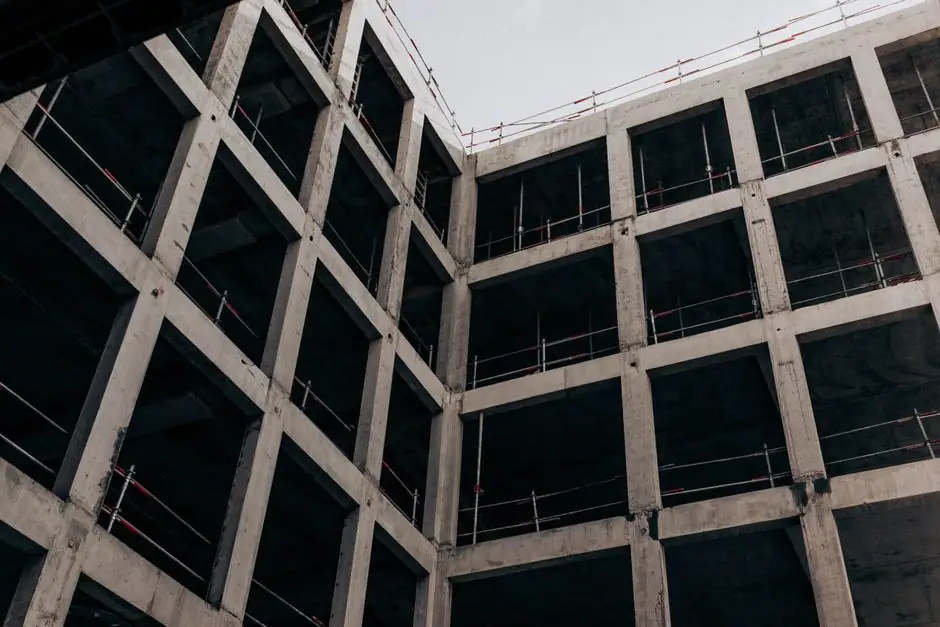
Two things bite here.
There is no operating history. Most lenders want the property stabilized, commonly around 85 to 90% leased for several consecutive months, before they will consider a cash-out.
Then the clock. The standard example carries $850 a month of holding costs. Stretch a build and lease-up over twelve months and that is $10,200 of carry, which swallows most of the $15,000 the refinance was meant to hand back. Multiply your real monthly carry by an honest schedule, then add a few months.
Treat land plus build budget the way the worked example treats purchase plus rehab. $300,000 in and $60,000 of work is $360,000 all in, and you only get it back if the finished, leased value supports the loan.
Reserves and the paperwork a commercial lender wants
Have a folder ready before you apply: rent roll, every signed lease, two or three years of operating statements or your projections on a new build, personal and business tax returns, a personal financial statement, entity documents and a list of properties you already own.
Reserves are larger here. Lenders commonly want several months of payments in cash, and many require an annual replacement reserve held with them. Roofs, parking lots and HVAC units are bigger line items on commercial, so your capital expenditure budget should be heavier than a house needs.
Underwriters also deduct a management fee whether or not you hire anyone, so price property management into your NOI even if you plan to run the building yourself.
When small commercial beats another duplex
| Another duplex | Small commercial | |
|---|---|---|
| Value set by | Nearby sales | Income and cap rate |
| Typical debt | 30 year fixed | 5 to 10 year fixed, balloon |
| Loan-to-value | Up to 75% | Often 65 to 75% |
| Your lever | Renovation quality | Leases and expenses |
Buy the duplex when you want simple comps, long fixed debt and a deep resale market.
Go small commercial when you can raise the income. A building with below market rents, expiring leases or empty space is one of the few places where a signature raises the appraised value as much as a crew does.
Run your numbers first
Start with the BRRRR Calculator on the home page to size the purchase, rehab and 75% refinance. Then test the commercial exit by hand: build your NOI, divide it by two or three realistic cap rates, and see whether the lowest one still returns your cash.
Frequently asked questions
Can you BRRRR a commercial property?
Yes. You buy, renovate, lease, refinance and repeat in the same order. Three things change. The appraiser values the building on its income instead of nearby sales, the refinance comes from a bank or commercial lender rather than a residential one, and the new loan usually has a balloon date instead of a 30 year fixed rate.
How is a commercial BRRRR refinance valued?
By income. Take net operating income and divide it by a market cap rate. Using the standard example here, $4,400 of monthly rent nets roughly $35,100 a year after vacancy, taxes, insurance, management and reserves. At a 7% cap rate that is about $501,000 of value. At 9% the same income is worth about $390,000.
Does the BRRRR method work on new construction?
It can, but the refinance comes later than people expect. You buy land, build with a construction loan that funds in draws, get the certificate of occupancy, lease the space, then refinance into permanent debt. Most lenders want the building stabilized first, commonly around 85 to 90% leased for several straight months, before any cash-out.
Which lenders refinance a commercial BRRRR?
Local banks and credit unions do most small commercial loans. Commercial mortgage brokers help when no local bank likes your property type. Agency programs cover apartment buildings of five units and up, and conduit or life company lenders handle larger loans. SBA 504 and 7(a) loans require owner occupancy, so they do not fit a pure rental.
Is small commercial better than buying another duplex?
It depends on what you want to control. A duplex gives you easy comps and 30 year fixed debt. Small commercial lets you raise the appraised value by signing better leases, which is real power when rents are below market. The trade is shorter loan terms, lower loan-to-value and a thinner buyer pool.