BRRRR Method Canada: How the Refinance Works North of the Border
The BRRRR method in Canada caps your refinance at 80% of value, with no CMHC insurance and a stress test to clear. See how a $360,000 deal plays out.
By the BRRRRCalculator.org team
The BRRRR method in Canada works the same way it does in the United States, right up to the refinance. Then the rules change: a Canadian lender will refinance a residential rental to a maximum of 80% of appraised value, mortgage default insurance is not available on a refinance at all, and you have to qualify at a rate roughly two points above the one you are paying.
So the answer is yes, you can do BRRRR in Canada. The deals that fail usually fail on debt service or on weak comps, not on the loan ceiling.
What stays the same in a Canadian BRRRR
Buy under value, renovate, rent, refinance, repeat. The arithmetic does not care which side of the border you are on. The BRRRR formula runs through the same four steps, and the test is still whether the new loan returns the cash you put in.
The standard deal on this site buys for $300,000, spends $60,000 on rehab, finishes at a $500,000 after-repair value and rents for $4,400 a month. All in at $360,000. A refinance at 75% of $500,000 lends $375,000, which returns the full $360,000 plus $15,000.
Holding costs of $850 a month carry the project while it is empty. Once a tenant is in, $6,000 of annual property tax and $2,500 of annual insurance come out of the rent.
The 80% refinance limit on a rental
A Canadian cash-out refinance on a residential property stops at 80% of value. That is not a lender preference. Federally regulated lenders cannot hold an uninsured residential mortgage above an 80% loan-to-value ratio, and refinances are not eligible for mortgage default insurance, so there is no way around it.
On paper that is more generous than the 75% most American rental lenders use. Eighty percent of $500,000 is $400,000, which returns the $360,000 and leaves $40,000.
In practice, lenders set their own caps below the legal limit. Many stop at 75% on a rental, and go lower on small multifamily, rural property or anything with a short rental history. Closing costs eat into the rest: legal fees, an appraisal, a discharge fee on the old loan, and title insurance.
How the mortgage stress test changes the math
Federally regulated lenders have to qualify you at a minimum qualifying rate set by the federal banking regulator, which is the greater of your contract rate plus two percentage points or a floor rate. That floor has been 5.25%, and the regulator reviews it, so confirm the current figure with a broker before you model a deal.
Here is what that does to the standard numbers. Take the $400,000 refinance over a 25 year amortization. At a 5.5% contract rate the real payment is about $2,460 a month. The lender tests you at 7.5%, where the payment is about $2,960.
Add $500 of monthly property tax and $208 of insurance and the qualifying housing cost is roughly $3,668 against $4,400 of rent.
Canada also uses different income ratios than the US. Instead of a debt service coverage ratio on the property alone, lenders run gross and total debt service ratios on you, with the rent handled one of two ways. Some lenders offset the housing cost with 50% to 80% of the rent. Others add half the rent to your income. The offset method is friendlier to investors, and which one your lender uses can decide a borderline file. The Financial Consumer Agency of Canada explains the basic qualifying rules in plain language.
| Typical US rental refinance | Canada | |
|---|---|---|
| Refinance ceiling | 70% to 75% | 80% |
| Qualifying rate | Contract rate | Contract rate plus 2%, or the floor |
| Income test | Property DSCR | Your GDS and TDS, with rent offset |
| Insurance on a refinance | Possible | Not allowed |
| Loan structure | 30 year fixed | Term of 1 to 5 years, then renewal |
That last row matters more than people expect. A Canadian mortgage is a short term inside a longer amortization, so you renew every few years at whatever rate exists then. You do not lock a rate for 30 years.
Private and B lender money for the buy and the rehab
Bank lenders will not fund a house that is not livable, and they will not advance renovation money in draws. So most Canadian BRRRRs start somewhere else: a private mortgage, a mortgage investment corporation, or a B lender. Rates run well above bank pricing, and a lender fee of a point or two of the loan amount is normal, plus broker and legal costs. The structure is close to a hard money loan in the US market.
One trap is worth naming. If you buy with a regular five year fixed mortgage and refinance eight months later, you break the term and pay an interest rate differential penalty, which can run into thousands. A prepayment penalty like that can swallow the whole $15,000 spread. Open or short term financing on the purchase avoids it.
When a lender will re-appraise after a renovation
There is no national seasoning rule in Canada, which is why American guidance confuses people here. Policy is set lender by lender. Some will use your purchase price rather than a new appraisal for the first six to twelve months of ownership. Others will take a fresh appraisal as soon as the work is finished and a lease is signed.
Ask the question before you buy, not after. The US version of this problem, with its fixed waiting periods and coverage tests, is covered in the guide on cash-out refinance seasoning.
Either way, keep permits, invoices, before and after photos and a signed lease. An appraiser who can see the scope of work has an easier time defending the number.
Why high-price markets rarely cash out
In Toronto, Vancouver and Victoria the binding constraint is the spread, not the loan cap. Fixer houses often trade at 85 to 90% of finished value, so there is no purchase price that lets an 80% refinance return everything. The difference stays in the house as dead equity.
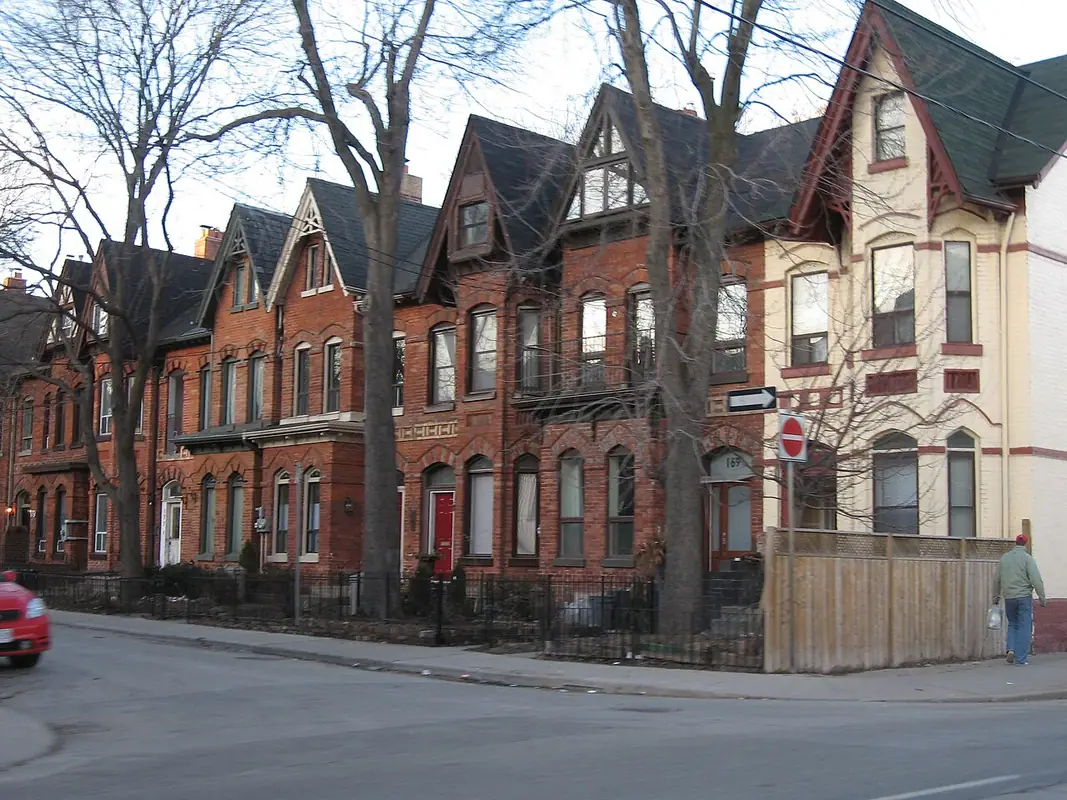
Rent-to-value is usually thinner in those markets too, so the rent struggles to carry the new payment at the stress test rate. Smaller Ontario and Prairie cities tend to screen better on both counts.
Holding it personally or in a corporation
Personal ownership keeps financing simple. Bank lenders prefer it, and the rates are better.
A corporation separates liability and makes partnerships cleaner, but it costs you something. Lenders usually want a personal guarantee anyway, more files end up with B lenders, and passive rental income inside a corporation does not get the small business tax rate. The tax treatment is specific to your situation, so check with an accountant and with the Canada Revenue Agency rather than copying what someone did in another province.
Run your own Canadian numbers
The BRRRR Calculator on the home page takes your purchase price, rehab budget, after-repair value and refinance percentage and shows what comes back at closing. Set the refinance to 80% for a Canadian lender, then run it again at 75% to see how a tighter lender policy changes your cash left in the deal.

Frequently asked questions
Does the BRRRR method work in Canada?
Yes. You buy under value, renovate, rent it out, then refinance, same as anywhere else. The difference sits in the exit. A Canadian lender refinances a residential rental to 80% of appraised value at most, mortgage default insurance is not allowed on a refinance, and you have to qualify at the stress test rate. Most Canadian deals fail on debt service or thin comps, not on the loan cap.
What is the maximum refinance on a rental property in Canada?
Eighty percent of the appraised value. Federally regulated lenders cannot hold an uninsured residential mortgage above that line, and a refinance cannot be insured, so 80% is the ceiling. Many lenders set their own limit lower on rentals, often 75%, and lower again on small multifamily or rural property. On a $500,000 after-repair value, 80% is $400,000 and 75% is $375,000.
Does the BRRRR method work in Ontario?
Yes, and Ontario is one of the busier provinces for it once you look outside the Toronto core. The 80% refinance cap and the stress test are federal rules, so they apply the same way across the country. Ontario adds its own land transfer tax, Toronto adds a second municipal one, and the Landlord and Tenant Board moves slowly, which can stretch a hold.
How does the mortgage stress test affect a BRRRR refinance?
You qualify at the higher of your contract rate plus two percentage points or the regulator's floor rate, not at the rate you actually pay. On a $400,000 loan over a 25 year amortization, a 5.5% contract rate means qualifying near 7.5%, so the payment the lender tests is roughly $2,960 instead of about $2,460. That gap decides borderline files.
Can you BRRRR in Toronto or Vancouver?
Rarely for a full cash-out. The problem in high price markets is comp pricing, not the loan cap. When fixer houses sell for 85 to 90% of finished value, no purchase price leaves enough spread for an 80% refinance to hand back all of your money. Rent also tends to be a smaller share of value there, so debt service gets tight.